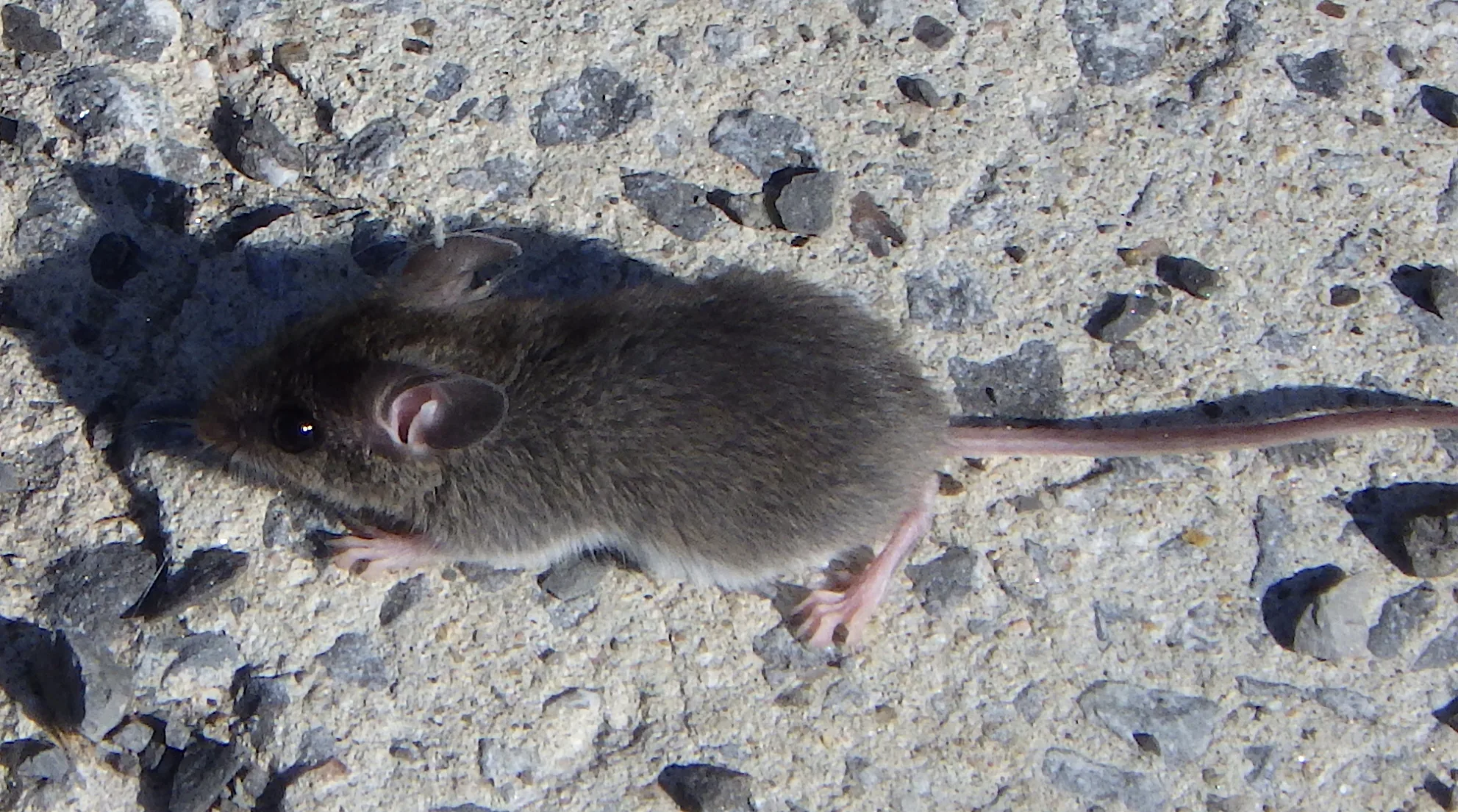
Rat Droppings vs Mouse Droppings: How to Tell
Mouse droppings are small, about an eighth to a quarter inch, with pointed ends. Rat droppings are larger, closer to the size of a raisin. Where you find them helps too.
Call a local technician (254) 276-0111Droppings are usually the first sign of rodents, and they tell you a lot. Size and shape say mouse or rat. Location says where they travel. How dry and crumbly they are says whether the activity is fresh. Here is how to read them, and how to clean them up without making yourself sick.
Mouse droppings
Texas A&M AgriLife training material describes house mouse droppings as an eighth to a quarter of an inch long and pointed. It also notes that a single mouse produces 50 to 75 droppings a day, which is why a small number of mice can leave what looks like a large mess.
You usually find mouse droppings scattered: in kitchen drawers, under the sink, behind the stove, along baseboards, inside cabinets and in the pantry. They tend to be spread out along the routes mice travel rather than piled in one spot.
Rat droppings
Rat droppings are much larger, closer to the size of a raisin or a little longer, and thicker. Norway rat droppings tend to have blunt ends; roof rat droppings are often a bit narrower with pointed ends. You find rat droppings in fewer spots but in larger groups: along the top of walls in the attic, in the garage along walls, near food sources and in corners where rats stop.
- Rice-size, pointed and scattered: likely mice
- Raisin-size or larger, in groups: likely rats
- High up in the attic or on rafters: likely roof rats
- Low in the garage or near burrows: likely Norway rats
Fresh or old?
The CDC notes that droppings and gnaw marks show rodents have been present, but old signs alone do not prove current activity. Fresh droppings are dark, moist and soft. Old ones are dry, gray and crumble when pressed with a stick. Never touch droppings with bare hands.
An easy test: wear gloves, clean an area using the CDC method described below, then check it again over the next few days. New droppings mean the activity is current. This is useful when moving into a rental where the last tenant may have left old droppings behind.
Other droppings that get mistaken for rodents
Cockroach droppings are smaller than mouse droppings and look like coffee grounds or pepper. Bat droppings, or guano, crumble into a shiny powder when crushed and pile up under a roost. Squirrel droppings are similar in size to rat droppings but are often found outside or near attic entry points by the eaves. If you are unsure, an inspection will settle it.
What the location tells you
Where you find droppings is often as useful as their size. Droppings in kitchen drawers and the back of the silverware tray point to mice using the cabinet base as a highway. Droppings on top of the water heater or along the garage wall point to rodents coming in from the garage. Droppings on top of the walls in the attic, near the eaves, point to roof rats. A pile in one corner, rather than a scattered trail, often marks a spot where a rat stops to eat.
Mark each spot with tape after cleaning it. New droppings in a marked spot tell you which routes are still active, which helps decide where traps go.
Photos for the technician
Before you clean up, take a photo of the droppings with a coin or a ruler next to them for scale. Note where you found them. A clear photo often lets a technician tell rats from mice on the phone and plan the visit. Then clean up using the CDC steps above and wash your hands.
How to clean them up safely
The CDC is clear: do not sweep or vacuum rodent droppings, urine or nesting material, since that can stir germs into the air. Instead:
- Open doors and windows for 30 minutes before you start.
- Wear rubber or plastic gloves.
- Spray the droppings with a fresh bleach solution, 1.5 cups of bleach per gallon of water, or a disinfectant, and let it soak for 5 minutes or as the label says.
- Wipe up with paper towels and throw them in a covered trash can.
- Disinfect the area again, then wash your hands.
For large areas like an attic or a storage room full of droppings, hire it out. See droppings cleanup.
Common questions
- How big are mouse droppings?
- About an eighth to a quarter inch long, with pointed ends, according to Texas A&M AgriLife training material.
- How many droppings does one mouse leave?
- Texas A&M AgriLife material says 50 to 75 a day, which is why droppings pile up fast.
- Can I vacuum droppings?
- No. The CDC says not to vacuum or sweep rodent droppings. Wet them with disinfectant and wipe them up.
- Are old droppings dangerous?
- They can still carry germs. Clean them with the same care as fresh droppings.